28 to 29 January 2026, Dewan Wawasan, Klinik Kesihatan Jalan Putra, Alor Setar, Kedah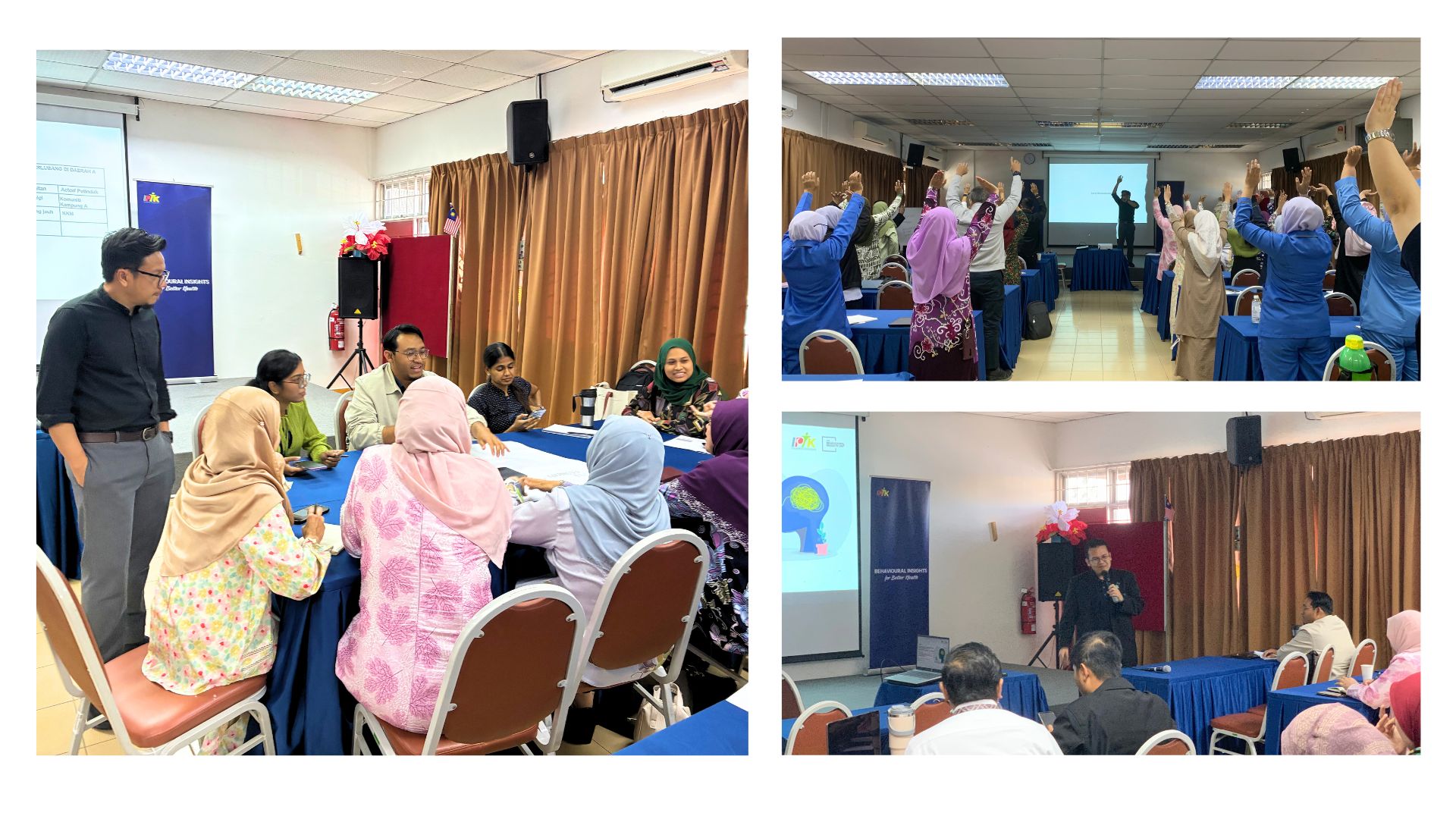
As we step into 2026, the BI Unit remains committed to strengthening the capacity of health staff across Malaysia through continuous training on behavioural science and behavioural insights. Building on the momentum from 2025, we officially began the 2026 training series with the Kedah State Health Department, particularly the Oral Health Programme, from 28–29 January 2026 in Alor Setar. With strong enthusiasm and high spirit, more than 30 participants from all districts in Kedah came together to explore how behavioural science can be applied to address real-world health challenges.
The training was facilitated by Dr. Saiful Adli, Head of BI Unit, En. Muhammad Irsyad Zainal Bahrin and En. Muhammad Ajwad Zainudin. Dr. Saiful opened by setting the national context of behavioural sciences and behavioural insights within the Ministry of Health Malaysia. This was followed by Module 1: Understanding Behavioural Science in Health, which introduced participants to key concepts in behaviour change. En. Muhammad Irsyad then delivered an engaging module on cognitive biases and nudges, highlighting how everyday decisions are often shaped by mental shortcuts rather than rational thinking. Later, En. Muhammad Ajwad presented the DDDIE Framework, a structured, practical tool proposed by the World Health Organization to support the design of effective behavioural interventions.
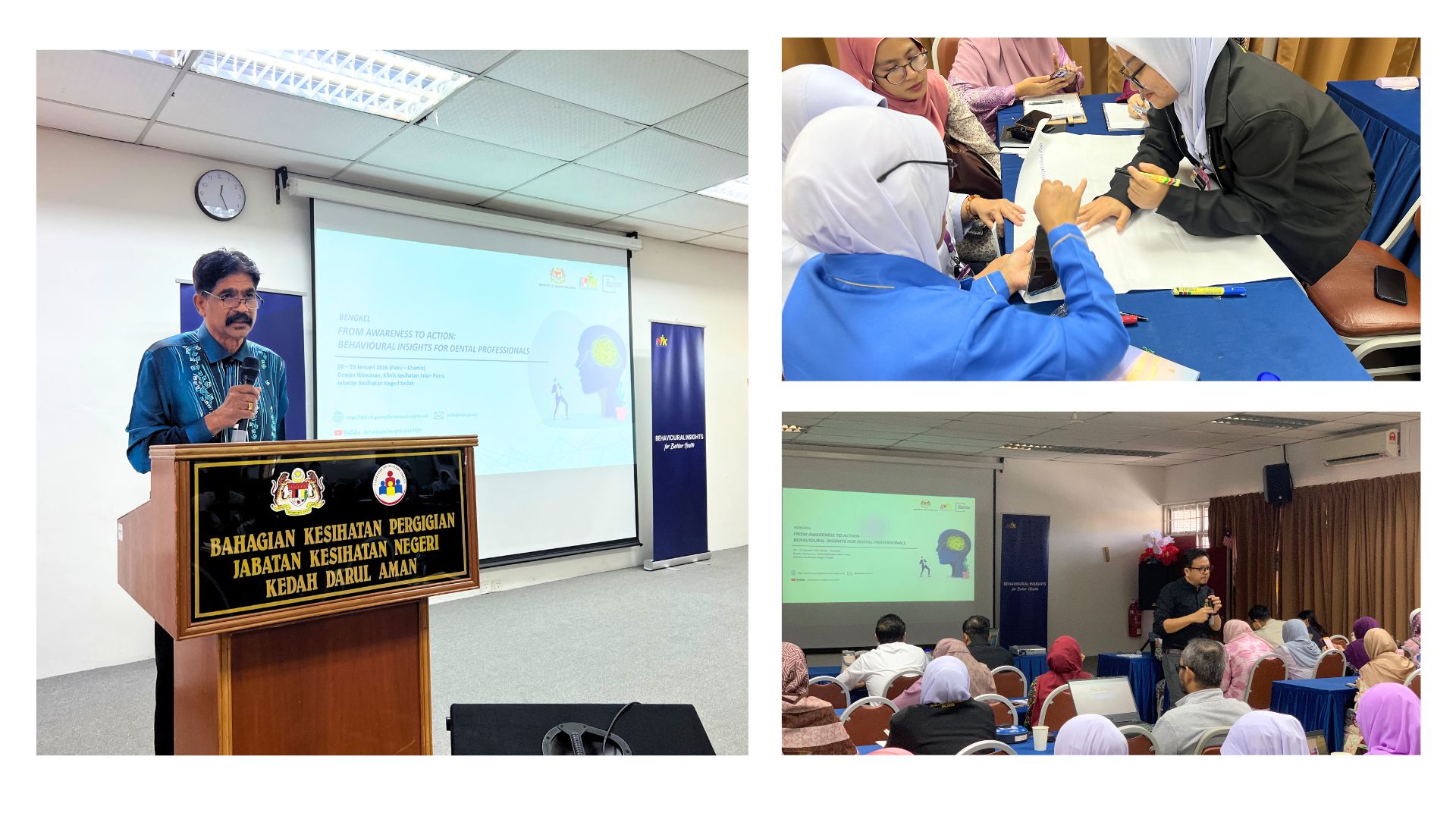 Participants learned that behind every health issue are often hidden behavioural barriers that prevent healthy behaviours. One key learning point was that proper toothbrushing technique remains a continuing challenge, even among working adults. The training also featured four group-work presentations, in which participants developed and shared proposed strategies to strengthen oral health improvement efforts in Kedah. These ideas covered various settings and target groups, including schools, communities, and workplaces.
The two-day programme concluded with an important message from Dr. Manimaran Krishnan, who emphasised the need to understand human behaviour and the underlying factors, such as socioeconomic conditions, before designing any intervention. Through continued collaboration with State Health Departments, behavioural insights will play an increasingly important role in shaping healthier communities, strengthening service delivery, and improving public health outcomes across Malaysia.