
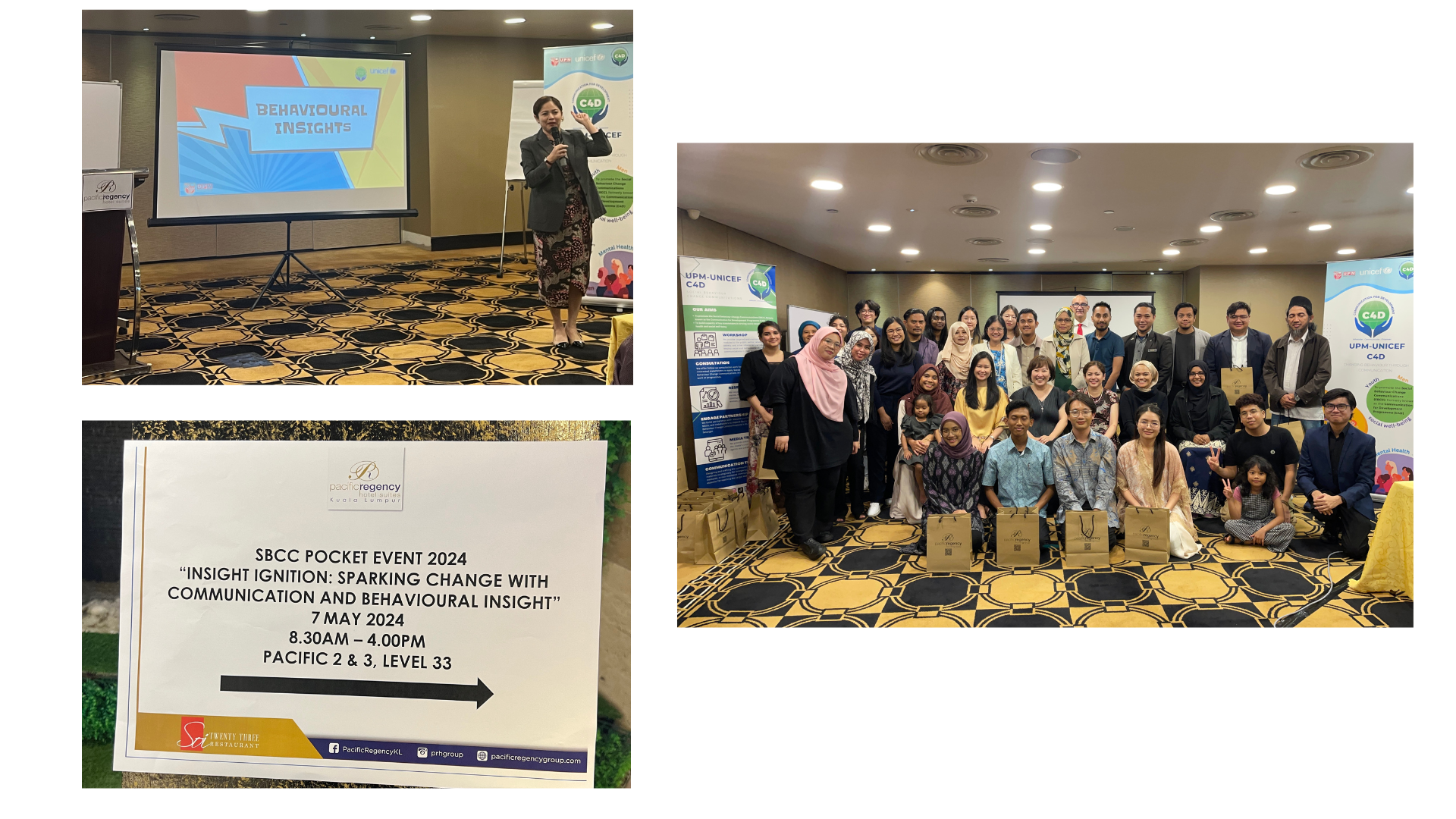
We were delighted to participate in the SBCC Pocket Event, which took place on May 7, 2024, in Kuala Lumpur. This one day event hosted by the UPM-UNICEF C4D Program, brought together numerous enthusiasts of behavioural change communication and behavioural insights from various entities. Among the attendees were representatives from University Malaysia Sabah, Universiti Kebangsaan Malaysia, INTI University, several NGOs, and a handful of government agencies. Dr. Saiful from the Behavioural Insights Unit represented the Ministry of Health.
Participants were introduced to fresh insights into uncovering the fundamental factors that shape human decision-making. The session started with a presentation by Ms. Karen Ong, the Executive Creative Director at Marketing for Change, followed by Ms. Sara Isaac, Chief Strategist at the same agency based in the United States. One of the important takeaways was the recognition that instead of attempting to persuade audiences to alter their beliefs (given our inherent resistance to change), the behavioural determinants framework, which includes elements such as enjoyment, popularity, and simplicity, redefines issues to align with the audience's desires and requirements. This approach often boils down to making behaviours enjoyable, accessible, and socially accepted, as these are the primary drivers behind the adoption of new behaviours for most individuals. Subsequently Dr. Syazana Ali, the founder of the NGO known as Noble Dr., shared her insights into the challenges encountered in delivering high-quality healthcare with a focus on mental health for marginalized communities especially children. As the evening progressed, attendees were treated to an illuminating session on behavioural insights led by Dr. Diyana Kasimon, the acting Director of the UPM-UNICEF-C4D Program. Her expertise shed light on the dynamics that shape decision-making processes, providing attendees with a deeper understanding of how behavioural insights can inform and enhance various aspects of program design and implementation.
The BI Unit IHBR