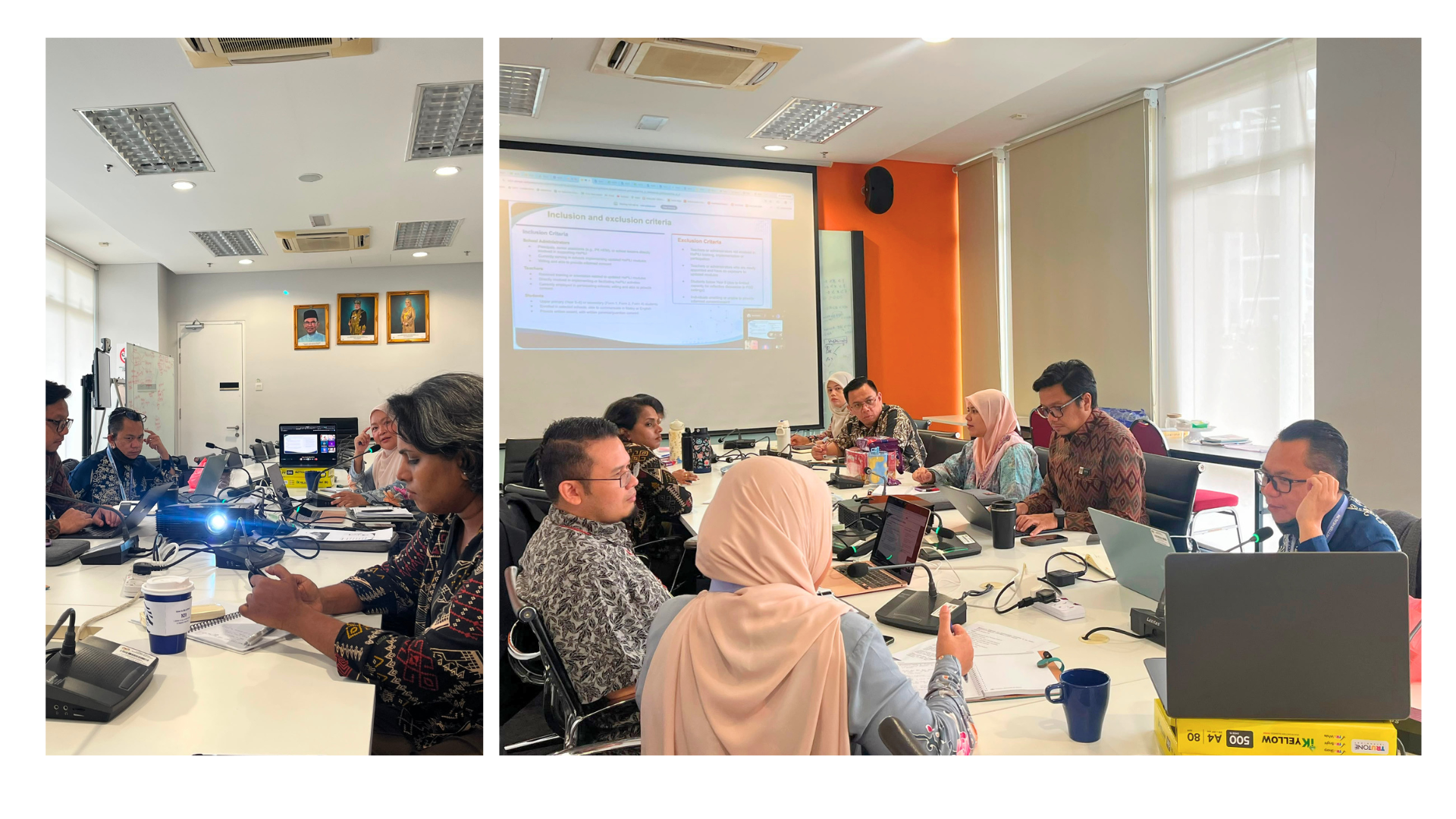
Recently we recently convened a stakeholder discussion to coordinate the implementation of the research project Behavioural Diagnosis and Implementation Evaluation of the HePiLI Program in Malaysia: A Qualitative COM-B Analysis (NMRR ID-26-02303-Y8N). The session gathered representatives from the Health Education Division, Ministry of Health Malaysia, and key divisions of the Ministry of Education to strengthen inter-agency collaboration in support of the study.
The discussion focused on identifying suitable schools across five participating states, Wilayah Persekutuan Kuala Lumpur, Melaka, Perlis, Terengganu, and Sabah, as well as coordinating data collection procedures and stakeholder engagement to ensure the study is implemented effectively. The qualitative research will involve 20 in-depth interviews (IDI) with school administrators and HePiLI coordinators, alongside 24 focus group discussions (FGD) with students to explore the behavioural enablers and barriers influencing programme implementation.
The study applies the COM-B (Capability, Opportunity, Motivation–Behaviour) framework to systematically identify factors influencing the implementation of the HePiLI programme in schools. Findings from the research are expected to generate evidence-based recommendations to strengthen programme delivery and support future health promotion initiatives within the education sector.
The meeting also reinforced the importance of close collaboration between health and education stakeholders in ensuring that behavioural science is effectively translated into practical, context-specific strategies for improving school health programmes nationwide. Through this collaborative approach, IHBR continues to advance evidence-informed public health research and promote the application of behavioural insights in policy and programme implementation.