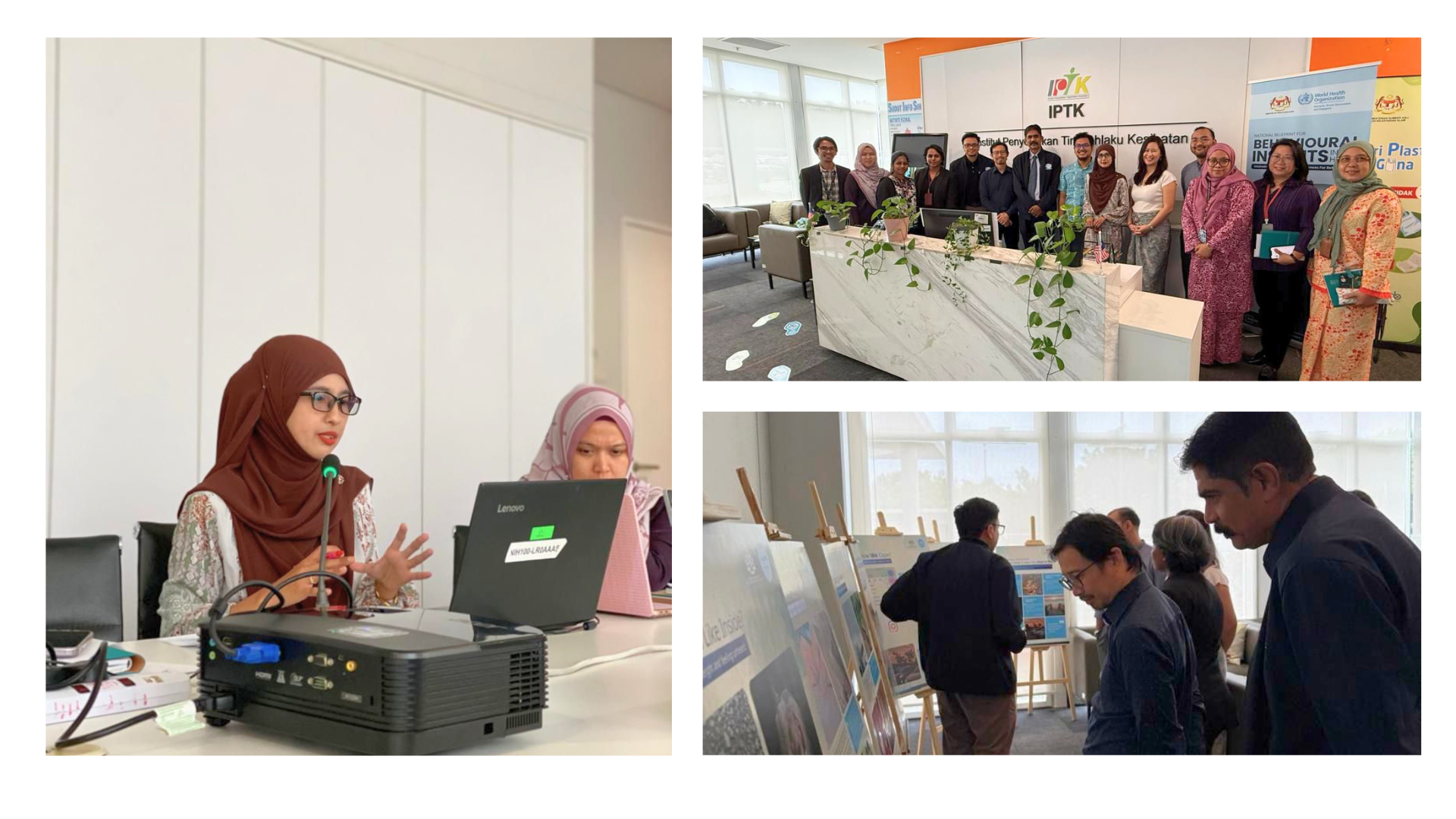
 What happens when adolescent stories are no longer just heard, but truly understood not as data points, but as lived experiences carrying fear, hope, hesitation, and resilience? This question guided a year-long qualitative journey under the WHO–UNICEF–NCEMH Joint Programme, in collaboration with IHBR and UNICEF. Through interviews, focus group discussions, and photovoice methods, adolescents, caregivers, teachers, healthcare providers, and community stakeholders shared their experiences, offering a deeper understanding of how young people navigate mental health challenges and make decisions about seeking help. Their stories revealed an important truth: help-seeking is rarely a simple choice, but a journey shaped by trust, relationships, social expectations, and the emotional safety of one's environment.
As these stories unfolded, so too did a clearer understanding of the barriers and enablers that influence adolescent help-seeking. Many young people described turning first to friends, family members, or digital platforms when emotions became overwhelming, while others hesitated to speak at all, uncertain of how they would be perceived. Stigma was often not openly acknowledged, yet its influence could be felt in moments of silence, fears of judgment, and concerns about being misunderstood. At the same time, the stories revealed resilience, courage, and a strong desire for connection reminding us that behind every challenge is a young person seeking acceptance, support, and hope.
The journey culminated on 15 May 2026 with the presentation of findings to key stakeholders, including UNICEF, alongside representatives from WHO Malaysia and National Centre of Excellence in Mental Health (NCEMH). In that room, the stories became more than findings they became a call to action. The evidence generated now serves as a foundation for the development of Social and Behavioural Change (SBC) strategies that are grounded not only in research, but in the realities, needs, and aspirations of adolescents themselves. More importantly, it reinforced a shared responsibility to transform understanding into meaningful action creating environments where stigma is reduced, conversations are normalised, and every adolescent feels safe, supported, and empowered to seek help when they need it.
WHEN STORIES LEAD TO UNDERSTANDING & ACTION: NAVIGATING MENTAL HEALTH STIGMA AND HELP-SEEKING AMONG ADOLESCENTS

Institute for Health Behavioural Research
B3, Kompleks NIH
No 1, Jalan Setia Murni U13/52
Seksyen U13, Setia Alam
40170 Shah Alam, Selangor
Phone : 03 3362 7600
Email: iptknih@moh.gov.my
